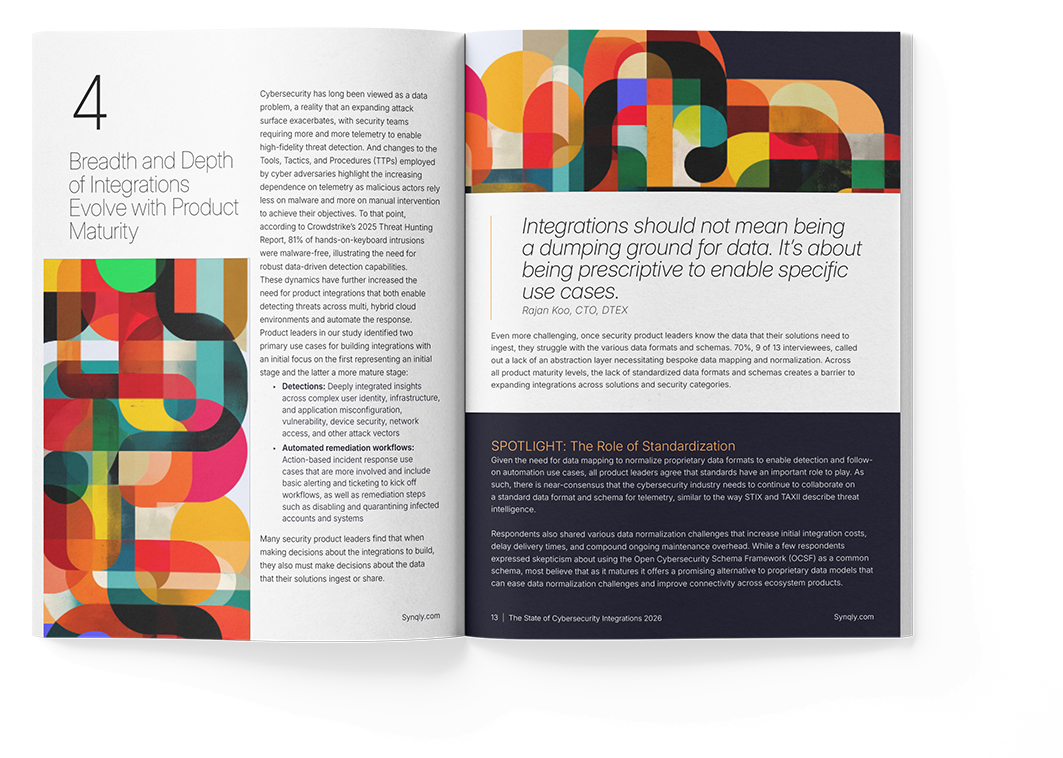
The State of Cybersecurity Integrations 2026
While 69% of vendors build integrations just to chase the next deal, the industry’s most successful vendors are shifting toward a “strategic multiplier” mindset to win and keep customers.
Inside the Cybersecurity Integration Crisis
Today’s security teams are struggling to manage a fragmented ecosystem of clustered tools in a desperate bid to gain visibility across their environments.
- 92% of leaders view ongoing maintenance as a variable, unpredictable cost
- 69% of leaders report having no identified metrics to calculate the value of an integration
- 70% of vendors lack the data abstraction layer necessary for bespoke integrations

Meet the Researcher
Doug Cahill
Doug Cahill brings over 25 years of experience across cloud and network security. Formerly the Senior VP of Analyst Services at ESG, Doug provides a unique perspective on the intersection of technical alliances and business growth.
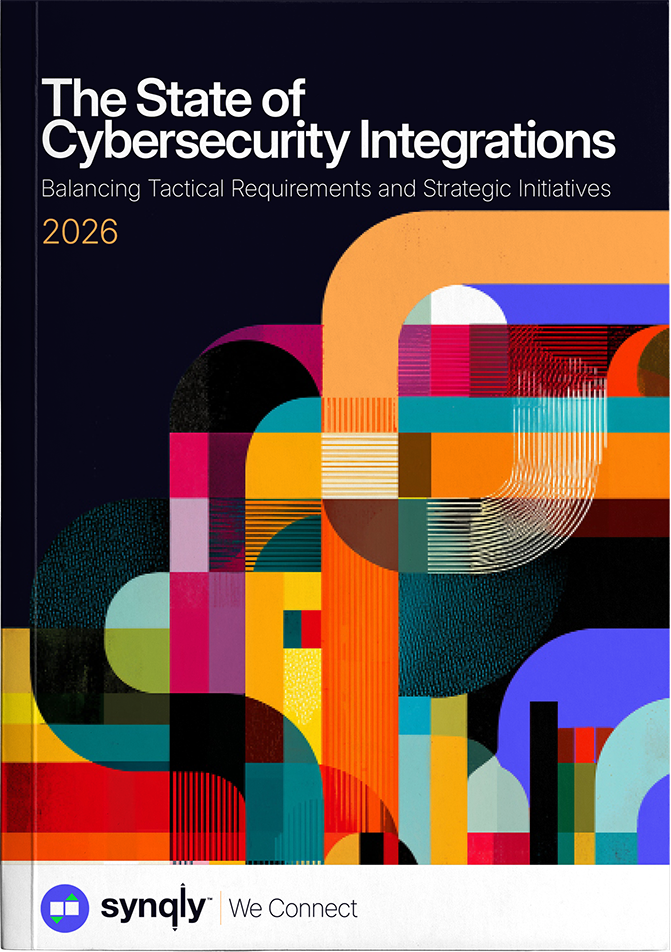
Integrations should not mean being a dumping ground for data. It's about being prescriptive to enable specific use cases.
Rajan Koo, CTO, DTEX
Most vendors treat integrations as a checkbox for a RFP.
The research identifies a clear three-stage evolution that separates market laggards from leaders.
-
The Functional MVP
Enabling basic alert visibility and ingestion for early-stage customer onboarding.
-
Actionable Enrichment
Moving beyond raw data to high-fidelity correlation that reduces customer noise.
-
Native Automation
Scaling to automated remediation workflows that live inside a partner's ecosystem or marketplace.
The Economic Reality of Integration Stickiness
Why does this matter for your bottom line?Integrations aren’t just technical features; they are revenue engines.
-
Reduced Churn
Products with two or more integrations in use are significantly "stickier" and maintain lower churn rates.
-
Marketplace Value
54% of vendors now view access to major cloud marketplaces (AWS, Microsoft) as a primary driver for their integration strategy
-
Customer Lifetime Value
Deeply integrated products enjoy higher renewal rates and greater opportunities for cross-selling.
Stop Reacting.
Start Orchestrating.
Don’t let your integration strategy become a permanent cost center. Move beyond tactical “one-off” builds and transform your product into a strategic platform that drives measurable recurring revenue.